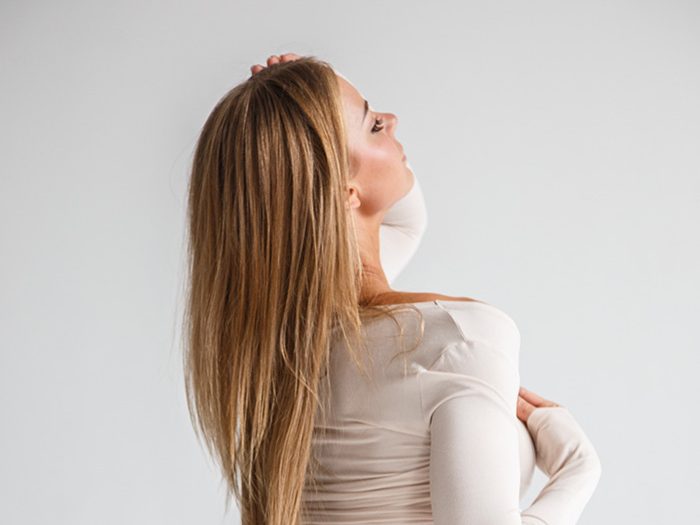
Menopause-related hair loss is the thinning and shedding of hair caused by the onset of a woman’s menopausal years. During this time, a woman’s progesterone and estrogen levels naturally decrease, which can upset the balance between the growing phase and shedding phase of the hair cycle.
While these changes are frustrating, they are not permanent or unfixable. With the correct diagnosis and a good understanding of how menopause affects your scalp, you can learn what your options are for addressing it and minimizing its effect. Everyone deserves to feel confident about their appearance, no matter what age or stage of life they are in.
Dr. Colin M. O’Dea is a Hair Restoration Surgeon at Premier Hair Restoration. Dr. O’Dea has received fellowship training and is dedicated to helping each of his patients restore the density and appearance of their hair.
If you are ready to start working with Dr. O’Dea, please request a consultation online or call (210) 642-2291.
Contents
- 1 About Menopause-Related Hair Loss
- 2 Candidates
- 3 Personal Consultation
- 4 Preparation
- 5 Treatment Options
- 6 Recovery
- 7 Results
- 8 Cost of Menopause-Related Hair Loss Treatments in San Antonio, Texas
- 9 FAQ
- 9.1 What causes menopause-related hair loss?
- 9.2 What treatments can Dr. O’Dea perform to address menopause-related hair loss?
- 9.3 Can hair grow back after experiencing menopause-related hair loss?
- 9.4 How will I know which treatment is best suited for my needs?
- 9.5 Can Dr. O’Dea combine several hair loss treatments?
- 10 References
Menopause is a period in each woman’s life that characterizes the permanent end of their reproductive years. It typically takes place between the ages of 45 and 56, and brings about many side effects and symptoms, such as:
- Hot Flashes
- Night Sweats
- Sleep Disruptions
- Mood Changes
- Decreased Libido
- Migraines (1)
However, one symptom that many women do not seem to talk about openly is menopause-related hair loss. This is a condition in which the hair begins to thin and shed as your hormonal levels change. While many patients often feel embarrassed or self-conscious about hair loss, female hair loss affects up to 50% of postmenopausal women, with 40% of healthy women experiencing frontal or parietal hair loss. (2)
As menopause occurs, women experience a decrease in their estrogen and progesterone levels and an increase in androgens, such as testosterone and dihydrotestosterone (DHT). (3) This directly affects the hair shaft and hair cycle, which may lead to changes such as lowered hair density, slower hair growth overall, and changes in hair texture.
Progesterone additionally inhibits the development of 5-alpha-reductase, which is an enzyme that converts testosterone into DHT. Without progesterone, this enzyme will continue to create DHT, which can lead to follicle miniaturization. This is a process where the hair follicles start to shrink, hair growth begins to slow, and the new hair that grows is finer and thinner than your existing hair—leading to the appearance of a widening part, diffuse thinning, or a receding hairline.
Candidates
If you have been experiencing thinning, shedding, a receding hairline, a widening part, as well as patchiness around the scalp since becoming menopausal, you may be a suitable candidate for our treatments.
To undergo these treatments, you should be in good general health without any underlying medical conditions that may affect your results. It is also important that you are non-smoking or willing to quit using nicotine entirely. Dr. O’Dea will assess your candidacy during your consultation. Please note that you may qualify for certain treatments, but not others.
Personal Consultation
Before scheduling your treatment, you will need to attend a personal consultation with Dr. O’Dea. During this consultation, he will explain what each of our treatments consists of, how he performs them, their benefits, as well as their limitations. He will then ask you about your medical history, including any procedures you previously underwent, your medication intake, and any allergies you may have. He will ask you about your scalp concerns and aesthetic goals. He will also perform a physical examination to analyze your scalp, including your natural hair growth pattern and the regions experiencing hair loss.
Dr. O’Dea will then use this information to determine which treatment will help you best. He will create a personalized treatment plan to address each of your concerns and may recommend pairing another procedure with it for more comprehensive results. As he does this, he will explain each concept to you, including how to prepare and what to expect from your recovery. He will also answer any questions you have prepared, as well as address concerns that may have arisen.
If you are ready to start restoring your luscious locks, please request a consultation online or call (210) 642-2291.
Preparation
Once you have decided to proceed with your treatment, Dr. O’Dea will provide you with a detailed set of pre-operative instructions. They will vary depending on the type of treatment you undergo, but they typically include:
- Refraining from using any blood-thinning medications or supplements
- Ceasing any nicotine or alcohol consumption in the weeks leading up to your treatment
- Washing your hair thoroughly before your treatment
- Arriving with clean hair that is free from styling gels, hair oils, or other products.
Treatment Options
Regenera Activa
Regenera Activa is a minimally invasive treatment that uses a solution composed of your hair follicles to stimulate new hair growth in areas affected by thinning or shedding. During this treatment, Dr. O’Dea will collect a small number of hair follicles from the back of the scalp using a punch extraction device. He will then process these follicles to create a concentrated solution of growth factors and regenerative cellular compounds before injecting it into the scalp. As he performs your injections, he will ensure the solution is administered at the same depth as your hair follicles for optimal results.
Minoxidil
Dr. O’Dea can prescribe Minoxidil to help you slow your hair loss and promote denser and thicker hair growth. Minoxidil is a medication that can address female-pattern hair loss by shortening the telogen phase (resting phase) and prolonging the anagen phase (growing phase) of the hair cycle. It achieves its results by relaxing the blood vessels, which can increase circulation, which then allows essential nutrients and oxygen to be supplied to the hair follicles. (4)
HairStim Topical Serums
HairStim Topical Serums are compounded topical solutions that consist of different medications that can each prevent hair loss and promote new hair growth. Each treatment consists of a blend of minoxidil, finasteride, dutasteride, and lantanaprost and can stimulate dormant hair follicles, improve circulation in your scalp, and block the prevalence of DHT. During your consultation, Dr. O’Dea will fully tailor your serum according to your specific needs, goals, and scalp health.
Follicular Unit Transplantation (FUT)
Follicular unit transplantation (FUT) is a type of hair restoration procedure that takes healthy hair follicles from the back of the scalp and transplants hair grafts to regions of the scalp experiencing thinning and shedding. He can perform this procedure by excising a strip of tissue to extract healthy hair follicles that are resistant to hair loss. This strip will then be dissected into individual grafts before placing them in a manner that matches your natural hair growth patterns. (5)
Recovery
Your recovery process will vary depending on the type of treatment or procedure you underwent. Non-surgical treatments typically require little-to-no downtime, while surgical intervention typically requires several days of downtime.
Dr. O’Dea will provide you with a full set of instructions, guidance, and advice after meeting with you and creating your treatment regimen. If any questions or concerns arise during this time, he will be available to provide you with the necessary guidance you need.
Results
You will be able to experience initial growth several months after beginning your treatment regimen or undergoing your procedure, with more apparent results developing after approximately one year. Your results will vary depending on the type of treatment you underwent and the pattern of your thinning, but you can expect to experience thicker and denser hair growth, as well as reduced symptoms of hair loss.
Dr. O’Dea will discuss each of your financial obligations with you during your consultation, once he has fully established each detail of your treatment plan. This is because the pricing will vary depending on the type of treatment you undergo and the extent of your corrections.
Dr. O’Dea additionally offers financing for those who qualify.
FAQ
During menopause, your estrogen and progesterone levels decline, which can lead to your hair follicles leaving the growth phase of the hair cycle and starting to shed. This decline can also influence the hair follicles to take longer to grow while producing finer and thinner hair. In addition to this, the lack of progesterone can also lead to follicle miniaturization.
Dr. O’Dea offers Regenera Activa, oral medications, topical serums, and FUT hair transplantation.
With the proper treatments, you may reverse some of the effects of menopause-related hair loss.
How will I know which treatment is best suited for my needs?
Attending a personal consultation is the best way to determine which treatments or procedures are best suited for each of your concerns. Here, Dr. O’Dea can assess your medical history, discuss your concerns, and perform a physical evaluation of your scalp.
Can Dr. O’Dea combine several hair loss treatments?
Yes, Dr. O’Dea can combine different hair loss treatments to restore the fullness and density of your hair. We recommend scheduling a personal consultation for personalized recommendations based on your symptoms and scalp health.
References
- Peacock K, Ketvertis KM. Menopause. National Library of Medicine. Published 2023. Accessed July 7, 2026. https://www.ncbi.nlm.nih.gov/books/NBK507826/2.
- Addressing the Root Causes of Female Hair Loss and Non-Pharmaceutical Interventions – JDDonline – Journal of Drugs in Dermatology. JDDonline – Journal of Drugs in Dermatology. Published June 18, 2025. Accessed July 6, 2026. https://jddonline.com/articles/addressing-root-causes-of-female-hair-loss-non-pharmaceutical-interventions-s1545961625p8763x/3.
- Rinaldi F, Trink A, Giorgia Mondadori, Giuliani G, Pinto D. The Menopausal Transition: Is the Hair Follicle “Going through Menopause?” Biomedicines. 2023;11(11):3041-3041. doi:10.3390/biomedicines111130414.
- Role of Oral Minoxidil in Patterned Hair Loss. Nih.gov. Published 2026. Accessed July 6, 2026. https://pmc.ncbi.nlm.nih.gov/articles/pmc9650732/#sec25.
- Khanna M. Hair Transplant with Strip Harvest: Indications, Contraindications, and Technique. Indian Journal of Plastic Surgery. 2021;54(04):451-455. doi:10.1055/s-0041-1741523