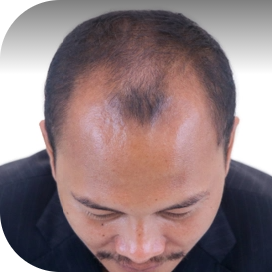
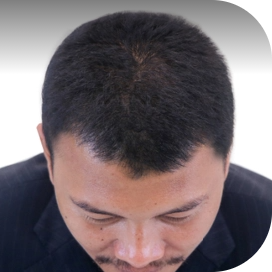

The Norwood Scale, or the Norwood-Hamilton Scale, is the main system doctors use to measure and classify the stages of male pattern baldness. It is important, as doctors and hair restoration specialists use this scale to document the exact severity of hair loss to determine the best hair restoration treatment.
Dr. Colin O’Dea is a fellowship trained hair restoration surgeon and is board-certified by the American Board of Emergency Medicine. He leads Premier Hair Restoration with a mission of helping you feel like the best version of yourself with personalized care and proven hair restoration methods. If you are ready to regain your self-confidence and enjoy life through our expert treatments and compassionate support, contact us online or call our office at (210) 642-2291 to schedule your personal consultation.
Contents
- 1 Understanding The Norwood Scale
- 2 Benefits of Utilizing the Norwood Scale
- 3 When You Should Explore Hair Transplants
- 4 Personal Consultation
- 5 Types of Hair Transplant Procedures
- 6 Cost of Hair Restoration in San Antonio
- 7 FAQ
- 7.1 How does the Norwood Scale help determine the severity of hair loss?
- 7.2 What are the different types of hair transplant procedures?
- 7.3 Does every surgeon use the Norwood Scale for hair restoration procedures?
- 7.4 What are the benefits of using the Norwood Scale?
- 7.5 Is it possible to receive more than one transplant?
- 8 References
Understanding The Norwood Scale
Patterned hair loss is the most common cause of hair loss that is seen in both sexes after puberty, typically presenting with progressive thinning, miniaturization, and loss of hair in the affected areas. (1) Currently, the Norwood-Hamilton classification system for men and the Ludwig system for women are most commonly used to describe patterns of hair loss. Hamilton, an anatomist, studied more than 300 male patients with hair loss and proposed a detailed classification system based on frontoparietal and frontal recessions and frontal thinning. (1) The various categories of hair loss described by him were:
- Scalps, not bald (types I-III)
- Scalps, which are bald (types IV-VIII)
Different Types of Hair Loss
- Type I: There is a receding hairline on both sides of the forehead and no significant signs of hair loss.
- Type II: There is a mild recession around the temples, which is often called a maturing hairline.
- Type III: There is a noticeable and deep recession at the temples forming an M, U, or V shape, and early crown thinning may begin.
- Type IV: Further frontal recession and noticeable thinning at the vertex are separated by a band of hair. Additionally, the two areas of hair loss are separated by a band of moderately dense hair that extends across the top.
- Type V: The vertex hair loss region is still separated from the frontotemporal region, but it is less distinct. The band of hair separating the front and the crown gets narrow and weak.
- Type VI: The separating bridge of hair disappears, merging the frontal and crown bald spots into one large area.
- Type VII: There will be severe hair loss, leaving only a thin, horseshoe-shaped band of hair around the sides and the back of the head. The hair is also usually not dense and may be quite fine and thinning.
Benefits of Utilizing the Norwood Scale
The Norwood Scale is is the global medical standard for classifying the stages of male pattern baldness, and utilizing it provides detailed clinical insights for patients, dermatologists, and hair restoration surgeons. (3) With the Norwood Scale, patients can:
- Detect early hair loss and plan early intervention
- Understand a universal language for patients and specialists
- Predict future hair loss progression
- Optimize hair transplant planning
- Track treatment effectiveness
- Manage expectations
When You Should Explore Hair Transplants
Once you begin to notice your hair loss patterns reaching stages three to five of the Norwood scale, you may want to consider a hair transplant procedure. (2) A hair transplant during the first two stages of the Norwood scale is considered too early since Dr. O’Dea can recommend preventative medical treatments like minoxidil and finasteride, red light therapy, or most importantly Regenera Activa treatments to preserve existing density. By stages three to four, you will see a moderate hair loss and more prominent hair thinning at the crown. However, the donor area at the back and sides of the head is still strong, making it an ideal time to explore a transplant. At the fifth stage, you will begin to see more advanced hair thinning all across the scalp, which means that a hair transplant can be an ideal solution to prioritize framing the hairline over total density but requires care and thoughtful planning. Lastly, during the sixth and seventh stages, a hair transplant becomes complex or limited since only a horseshoe-shaped band of hair remains, meaning donor hair may not cover the entire scalp.
Beyond the scale’s measurements, adequate density of the donor area on the back and sides of the scalp is essential to allow for transplantation.
Personal Consultation
During your personal consultation, Dr. O’Dea will evaluate your medical history and discuss your hair loss pattern and its timeline. He will also perform a physical evaluation to further examine your pattern of hair loss and detect the areas where your hair loss is mostly present. Using the Norwood scale, he will determine the severity of your hair loss with the seven-stage visual system to recommend the best treatment. Dr. O’Dea will address any questions or concerns you may have about your hair loss and your personalized treatment plan. His goal is to allow you to feel comfortable and confident in your decision to enhance your hair growth. If you are ready to take the next step in your hair restoration journey, contact us online or call our office at (210) 642-2291 to schedule your personal consultation.
Types of Hair Transplant Procedures
FUE Hair Transplant
Follicular Unit Extraction (FUE) uses a harvesting method that involves the extraction of hair grafts, each containing one to four follicular units. It uses a cylindrical punch tool to transplant the grafts in areas of hair loss. This type of transplant is ideal for those who want to wear their hair short in the back after their surgery and are comfortable shaving a large area on the back and sides of the scalp during the surgery.
FUT Hair Transplant
Follicular Unit Transplantation (FUT) is a hair transplantation method that harvests and transplants individual follicular units. It harvests a strip of scalp from the donor area in the back of the head and dissects it under the microscope into individual follicular units. This technique is ideal for people with long hair who do not want to shave a large area on the back and sides of the scalp during the surgery.
Cost of Hair Restoration in San Antonio
The cost of your hair restoration procedure will vary depending on the severity of your hair loss concerns, the specific techniques Dr. O’Dea will utilize, and more. He will provide you with a detailed cost outline during your personal consultation. Contact us online or call our office directly at (210) 642-2291 to schedule an appointment!
FAQ
How does the Norwood Scale help determine the severity of hair loss?
The Norwood Scale utilizes a seven-stage scale that categorizes and measures the severity of your hair loss concerns. The scale starts at one, which means there are little to no hair loss concerns, and ends at seven, indicating the worst and most severe case of hair loss.
What are the different types of hair transplant procedures?
The most common hair transplant procedures are FUE and FUT hair transplants. An FUE method removes individual hair follicles directly from the back or sides of your head using a small punch tool, and an FUT technique cuts a thin strip of scalp tissue from the back of the head and then separates it into individual hair grafts.
Does every surgeon use the Norwood Scale for hair restoration procedures?
Yes, almost every hair restoration surgeon uses the Norwood Scale since it serves as a baseline tool to classify male pattern baldness. It gives doctors and patients a shared and standard understanding to describe the stages of hair loss through seven different stages.
What are the benefits of using the Norwood Scale?
The Norwood Scale can detect early hair loss, help plan early intervention, provide a universal language for patients and specialists, predict future progression, optimize hair transplant planning, track treatment effectiveness, and much more!
Is it possible to receive more than one transplant?
Yes, it is possible to receive more than one hair transplant, but Dr. O’Dea recommends that you wait at least one year before getting another hair transplant, as it may take this amount of time to see the final effects of the transplant.
References
- Gupta M, Mysore V. Classifications of patterned hair loss: a review. Journal of Cutaneous and Aesthetic Surgery. 2016;9(1):3. doi:10.4103/0974-2077.178536
- Umar S, Lohlun B, Ogozuglu T, Carter MJ. A Novel Follicular Unit Excision Device for All-Purpose Hair Graft Harvesting. Clin Cosmet Investig Dermatol. 2021;14:1657-1674. doi:10.2147/CCID.S333353
- Celleno L, Bussoletti C, Tolaini MV, et al. A Novel Approach Against Male Pattern Hair Loss With Topical Dimethylglycine Sodium Salt (DMG-Na) and Caffeine: Efficacy of a 24-Week, Double-Blind, Randomized, Placebo-Controlled Trial. J Cosmet Dermatol. 2025;24(8):e70390. doi:10.1111/jocd.70390
- Pittella F, Castro CG, Trivellini R, et al. PRECISE Scale: a quantitative classification for androgenetic alopecia and its application to hair transplantation. Aesthetic Plastic Surgery. 2024;48(5):775-784. doi:10.1007/s00266-023-03462-4